Table of Contents
The Year of the Fire Horse starts now. Chinese New Year lands on February 17; Losar, the Tibetan New Year, follows on February 18 — and both calendars agree that 2026 is all about bold moves, fast energy, and not overthinking it. Sounds like a trip to us.
Lunar New Year celebrations across the U.S. have gotten massive. We’re talking 288-foot golden dragons carried by 180 martial artists, firecracker ceremonies so loud they hand out earplugs, and bakeries cranking out nian gao (traditional sweet, chewy rice cakes), red bean buns, and khapse (a traditional Tibetan deep-fried biscuit) at a pace that would make your favorite brunch spot jealous. As a bonus, the best celebrations happen in cities you can reach by bus or train.
We broke this guide down by vibe so you can find the Lunar New Year trip that fits you. Do you want to stand in the middle of a world-famous parade? Eat momos in Jackson Heights? Wander a neighborhood that transforms completely for two weeks? That’s for you to decide.
🐉 The Big Spectacles
For when you want confetti in your hair and firecrackers shaking you to the core.
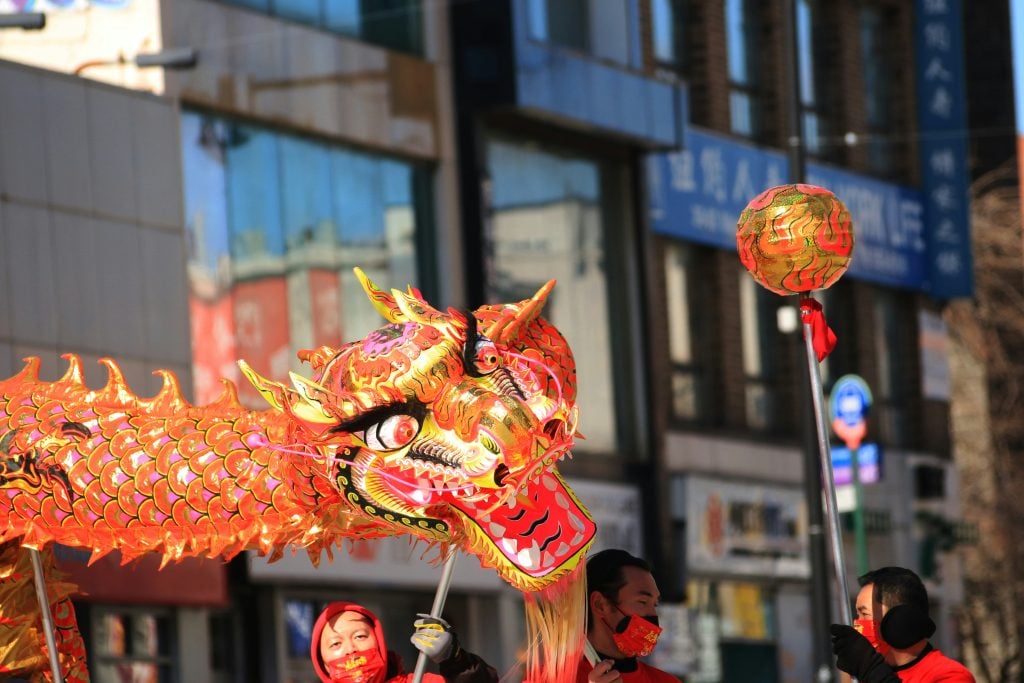
Some cities go all-out for Lunar New Year, with parades that shut down entire neighborhoods, firecracker ceremonies that register on seismographs (probably), and crowds so thick you’ll make three new friends whether you want to or not. If you’ve never experienced a major Lunar New Year celebration, these are the ones that’ll convert you.
San Francisco, California
The San Francisco Chinese New Year Parade has been ranked one of the top ten parades in the world. Running since the 1860s, it predates the Golden Gate Bridge by about 70 years and has grown into the largest Lunar New Year celebration outside of Asia. The 2026 edition takes over downtown on Saturday, March 7 at 5:15 PM — a full nighttime illuminated procession from 2nd & Market through Chinatown with over 100 groups marching.
The headliner: a 288-foot Golden Dragon (“Gum Lung”) carried by 180+ martial artists from the White Crane team. Olympic gold medalist Eileen Gu is this year’s Grand Marshal. Thousands of firecrackers will go off. You will need earplugs. This is not a suggestion.
But the parade is really the peak of weeks of celebrations. The Flower Market Fair (Feb 14-15) on Grant Street is where families stock up on flowers, fruit, and decorations for good luck; it’s one of those traditions that feels genuine even surrounded by tourists. The Community Street Fair (March 7-8) fills Chinatown with 120+ vendor booths, live Chinese opera, drumming, and acrobats. And the Asian Art Museum’s free celebration on Feb 1 at Osher Plaza brings lion dances, mahjong, and brush painting demos to a chill outdoor setting.
| Buses to San Francisco | From $8 | |
| Trains to San Francisco | From $32 |
Skip the Kearny Street crowds and stake out your viewing spot along Geary or Post by 4 PM for fewer crowds. Take BART to Montgomery Station. Free standing room along the route; bleacher seats start at $48 if you want a guaranteed spot.
New York City
NYC spreads Lunar New Year across three different Chinatowns over a month (Jan 23 – March 1), which means you can show up any weekend in late February and land in the middle of something.
Manhattan’s Chinatown is the most iconic. The Firecracker Ceremony on February 17 in Sara D. Roosevelt Park is where the new year officially begins. Exciting bangs, thick smoke, and lion dances will take over the streets. The 28th Annual Lunar New Year Parade on March 1 is the grand finale, sending dragon dances, martial arts crews, and floats down Mott Street in a spectacle that transforms Lower Manhattan.
Head to Flushing, Queens for the February 21 parade if you want the version that feels more like a neighborhood celebration, with bigger local energy and great food. This is one of the best Asian food neighborhoods in the country, but more on that later. Brooklyn’s Sunset Park has its own parade on February 22 along 8th Avenue, too (and it’s free, natch).
For the Tibetan side of the new year, the Rubin Museum of Himalayan Art hosts a Losar Family Celebration on February 17-18 at the Intrepid Museum (Pier 86, West 46th Street) with traditional Tibetan music, dance performances, and hands-on cultural activities. It’s a quieter counterpoint to the firecracker ceremonies downtown — and a reminder that Lunar New Year belongs to more than one tradition.
A sleeper pick? Super Saturday on February 28. More than 20 lion and dragon dance troupes roam Manhattan’s Chinatown blessing local businesses — weaving through bakeries, restaurants, and grocery stores. It’s been happening since the 1960s, it’s super exciting, and it’s the kind of thing that makes you understand why this holiday has lasted thousands of years.
| Buses to New York | From $5 | |
| Trains to New York | From $6 |
The Oculus at World Trade Center lights up in red and gold for Lunar New Year. Go at blue hour (right before dark) for unreal photos.
Los Angeles, California
LA does Lunar New Year the way LA does everything: sprawled out, multicultural, and impossible to experience in a single day. The anchor event is the 127th Golden Dragon Parade on Saturday, February 21 from 1-4 PM through Chinatown. The route fills with dragon and lion dances, martial arts performances, ballet folklórico groups, and marching bands. Free to watch from the route; grandstand seats run about $53.
Meanwhile, the City’s Department of Cultural Affairs is running 12 free events across LA from mid-January through March 1, honoring Chinese, Korean, and Vietnamese traditions. K-pop dance party in NoHo one weekend, Vietnamese Tết festival in the San Fernando Valley the next. And the 48th Annual Chinatown Firecracker Run (Feb 28 – March 1) combines a 10K through the hills of Elysian Park with a two-day free festival featuring lion dancers and 100,000 firecrackers.
| Buses to Los Angeles | From $6 | |
| Trains to Los Angeles | From $5 |
Disney California Adventure runs a Lunar New Year celebration from Jan 23 – Feb 22 with Mulan’s procession and food booths celebrating Chinese, Korean, and Vietnamese cuisine. Yes, it’s Disney. But the food is legit and the cultural programming is thoughtful.
🏨️ The Neighborhood Scenes
Where the celebration feels like you got invited to someone’s block party.
Not every great Lunar New Year requires a 288-foot dragon. Some of the best celebrations are neighborhood-sized — small enough that the lion dances feel personal, the bakeries know you’re coming, and the whole thing has an energy that big-parade cities can’t replicate. These are the celebrations that feel more intimate.
Boston’s Chinatown
Boston’s Chinatown is small, only a few blocks between the Theater District and the highway. But it’s also one of the largest Chinese communities in the U.S., which means it packs an enormous amount of celebration into a very small footprint. That density is what makes it fun: you can wander from lion dances to dumpling shops to calligraphy workshops without ever needing directions.
The centerpiece is the Chinese New Year Lion Dance Parade on March 1, starting at 10:30 AM at Phillips Square (Harrison Ave and Beach Street). But here’s what makes Boston’s version different from the big-city parades: after the initial march, lion dance troupes scatter across Chinatown simultaneously, going business to business on Kneeland Street, Essex Street, Harrison Ave, and every alley in between. The whole neighborhood becomes the parade route. Just follow the drums and firecrackers.
The Chinatown Main Street Market runs February 11-16 at the China Trade Center (2 Boylston Street), daily from 9 AM to 6 PM. The market is a great spot for fresh flowers, decorations, red envelopes, and gifts. The Cultural Village runs at the same location on parade day (March 1 from 11 AM – 3:30 PM) with performances, crafts, calligraphy, and snacks.
| Buses to Boston | From $3 | |
| Trains to Boston | From $6 |
Dine Out Boston runs February 22 – March 7, which overlaps perfectly with the Lunar New Year celebrations. Hit Chinatown for the festivities, then take advantage of prix-fixe menus at restaurants across the city. Two celebrations, one trip.
Chicago’s Chinatown
Chicago has one of the most well-preserved Chinatowns in the country. While many others got hollowed out by gentrification, Chicago has held its ground. The bakeries, dim sum palaces, and tea shops on Wentworth Avenue are still there, still packed, and still very much the real thing. During Lunar New Year, the whole neighborhood takes on a different energy.
The Chinatown Lunar New Year Parade on Sunday, March 1 at 1 PM has been running for 114 years, making it one of the oldest celebrations of its kind in the country. Starting at 24th Street & Wentworth Avenue and heading north toward Cermak, it brings traditional dragon and lion dances, marching bands, and floats through streets that feel like they were built for this moment. Firecrackers stream down from the entrance gate to kick things off, and the energy is loud, colorful, and warm in the way that only a neighborhood parade can be.
Between the parade, dim sum, and bakery runs, you could easily spend a full day here without leaving a four-block radius. Chiu Quon Bakery has been the anchor since 1986 (it’s the oldest Chinese bakery in Chicago) handmaking everything from scratch. And the CTA Red Line drops you right at the Cermak-Chinatown stop.
| Buses to Chicago | From $8 | |
| Trains to Chicago | From $6 |
Parking is a nightmare during the parade. Take the Red Line. Seriously.
Jackson Heights, Queens
Just a few stops from Flushing on the same 7 train, Jackson Heights is home to one of the largest Tibetan and Himalayan communities in the U.S. During Losar, the restaurants lining Roosevelt Avenue become the heart of the celebration: families in traditional dress share plates of momos, thukpa, and butter tea while temple visits and community gatherings happen throughout the neighborhood.
This isn’t a parade-and-fireworks situation. Losar in Jackson Heights is intimate — centered on food, family, and temple blessings. The United Sherpa Association on 74th Street hosts community celebrations where visitors are welcome to receive blessings and try traditional Losar foods like dresi (sweet rice with raisins and butter) and khapse (deep-fried biscuits in ornate shapes). Meanwhile, Khampa Kitchen and Phayul — two of the neighborhood’s most beloved Tibetan restaurants — will be packed with regulars celebrating.
The vibe is completely different from Chinatown’s fireworks, but it’s just as meaningful. And it’s reachable on the same subway line.
| Buses to New York | From $5 | |
| Trains to New York | From $6 |
Take the 7 train to 74th St–Broadway. You’ll exit right onto Roosevelt Avenue, in the middle of Tibetan restaurant row.
Flushing, Queens
We mentioned Flushing earlier, but it deserves its own spotlight because it’s fundamentally a different experience from Manhattan’s parade. Flushing’s February 21 parade is run by the local business association, and the crowd is overwhelmingly neighborhood residents.
But the real reason Flushing belongs in this section is what happens around the parade. The blocks surrounding Main Street and Roosevelt Avenue are home to one of the densest concentrations of Asian-owned businesses in the country, and during Lunar New Year, shop windows go red and gold, bakeries stock up on seasonal treats, and the food courts — yes, plural — hit peak volume. Nan Xiang Xiao Long Bao has lines around the block for soup dumplings. The New York Food Court on Roosevelt Avenue has stalls slinging hand-pulled noodles and jian bing (effectively Chinese crepes). Mochiido makes mochi donuts in all sorts of flavors, and you will buy a dozen whether you planned to or not.
| Buses to New York | From $5 | |
| Trains to New York | From $6 |
Take the 7 train to Flushing–Main St. The ride from Times Square takes about 40 minutes and drops you right in the middle of everything. No transfers, no confusion.
📈 The Growing Ones
Cities where the celebration gets bigger every year and still has that “we’re building something” energy.
These are the cities where Lunar New Year celebrations are expanding fast, adding new events, drawing bigger crowds, and feeling like they’re on the verge of becoming major destinations. Get in now, because the energy of a growing celebration is genuinely different from an established one.
Washington, DC & the DMV
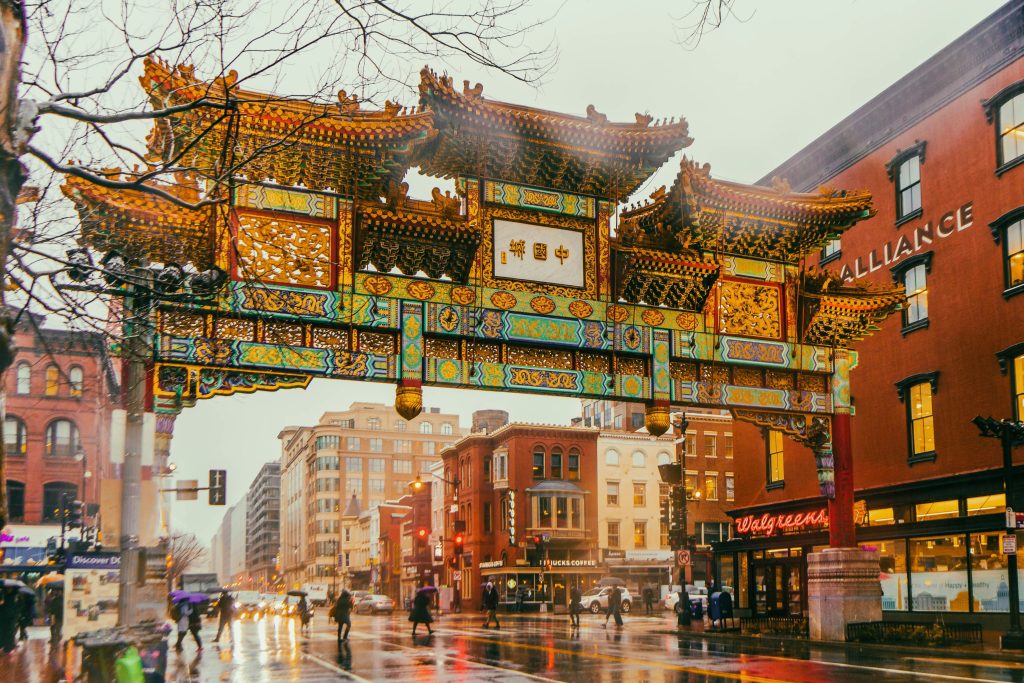
DC’s Chinatown is, let’s be honest, mostly a Chinatown in name at this point (there are more chain restaurants than Chinese-owned businesses on H Street now). But the cultural institutions here more than make up for it, and the surrounding DMV region has a thriving Asian community that’s putting its own stamp on the holiday.
The Smithsonian’s National Museum of Asian Art hosts its 2026 Lunar New Year Festival on Saturday, February 21 — a free, all-afternoon event spanning the museum and the neighboring Smithsonian Arts & Industries Building on the National Mall. The programming keeps expanding year over year: cultural performances, food vendors, art installations, and a pop-up market. The Year of the Horse theme is woven throughout.
The next day, the Annual Chinese Lunar New Year Parade rolls through downtown Chinatown on Sunday, February 22 at 2 PM. The Chinese Consolidated Benevolent Association has been doing this for over 65 years. The parade starts at 6th & I Streets NW and ends with a firecracker show on H Street. It’s compact, it’s colorful, and it’s walking distance from everything on the National Mall.
Meanwhile, just north in Maryland, the City of Rockville holds its own Lunar New Year Celebration on Saturday, February 21 from 1-3:30 PM at Richard Montgomery High School, now in its 18th year. It’s organized in partnership with Rockville’s Asian Pacific American Task Force and features cultural performances, interactive displays, kids’ crafts, and to-go snack boxes. In Northern Virginia, celebrations pop up from Reston to Falls Church to McLean. The Nai-Ni Chen Dance Company performs at the Alden Theatre on Feb 18, and Central Place Plaza in Arlington hosts a free celebration with lion dances on Feb 19.
The whole DMV corridor is growing its Lunar New Year presence every year, and the best part is that it’s driven by the communities who actually celebrate it.
| Buses to Washington | From $7 | |
| Trains to Washington | From $6 |
Metro to Gallery Place-Chinatown for the parade. But if you’re coming from the Red Line via Silver Spring, exit at Judiciary Square instead and walk two extra blocks — you’ll avoid the parade-day crowds entirely. Also: the sidewalk bricks around Chinatown have zodiac sign carvings in them. Find the horse. Take a photo (and tag us; we’d love to see your pics).
Chicago’s Argyle Street (Uptown)
Chicago’s Chinatown gets the big parade (see above), but the Uptown neighborhood’s Argyle Street Lunar New Year Parade on Saturday, February 21 at 1 PM is the scrappier, newer, more multicultural celebration — and it’s growing fast.
Argyle Street (sometimes called “Asia on Argyle”) is a cultural corridor for Vietnamese, Chinese, Thai, and Cambodian communities, and the parade reflects that mix. The celebration features over 20 community groups, performers, and dancers, plus pop-up activities and street vendors along the route. The whole thing is organized by Uptown United and local businesses, and it has the energy of a neighborhood that’s actively building a tradition.
Stick around after the parade for some of the best pho and banh mi in the Midwest.
| Buses to Chicago | From $8 | |
| Trains to Chicago | From $6 |
Between the Feb 21 Argyle parade and the March 1 Chinatown parade, you could do a Chicago Lunar New Year double-header across two weekends!
LA’s Citywide Celebrations
We covered LA’s Golden Dragon Parade in The Big Spectacles, but the growing part of LA’s Lunar New Year scene is everything else. The City’s cultural affairs programming has expanded to 12 free events in 2026, spread across neighborhoods and honoring Chinese, Korean, and Vietnamese traditions. That’s up from previous years, and the diversity of the programming — a Vietnamese Tết festival in the San Fernando Valley, a K-Pop Demon Hunters dance party in NoHo, a chamber music Lunar New Year concert at the Walt Disney Concert Hall — reflects how the celebration is expanding well beyond Chinatown.
The L.A. Zoo hosts a zodiac animal tour with Chinese, Korean, and Vietnamese dance performances. USC Pacific Asia Museum in Pasadena does a free afternoon of pan-Asian activities timed with its grand reopening. And the Chinese Club of San Marino’s Lunar New Year Festival in Lacy Park doubles as a community fundraiser for fire relief in the San Gabriel Valley.
| Buses to Los Angeles | From $6 | |
| Trains to Los Angeles | From $5 |
🎐 Lowkey Experiences
For when you’d rather make lanterns than fight crowds.
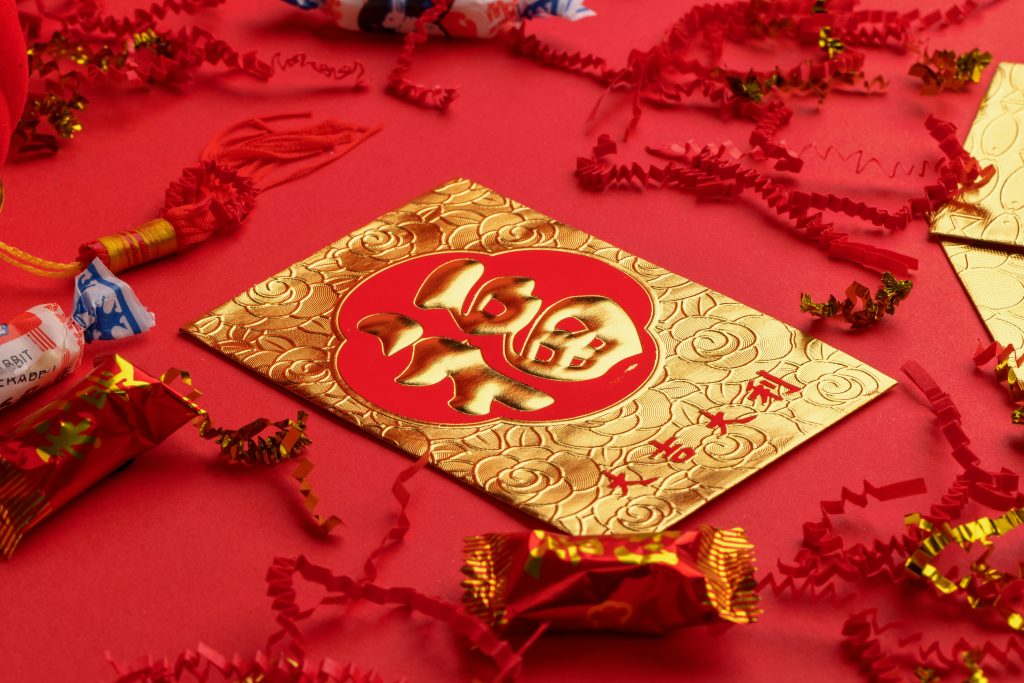
Not everyone wants to stand in a crowd of 100,000 people for two hours. (Respect.) Some of the best ways to celebrate Lunar New Year are quieter: museum nights, workshop events, collaboration dinners, and neighborhood traditions that are more about participating than spectating. If your ideal Lunar New Year involves making something with your hands, eating something incredible, or learning something new, these are for you.
Philadelphia, Pennsylvania
Philly’s Lunar New Year scene is sneaky good, leaning harder into culture and food than parades.
The Penn Museum kicks things off with its 45th annual CultureFest! Lunar New Year on January 31, 10 AM – 4 PM: traditional and contemporary dance, storytelling, art workshops, tai chi, and a Lion Dance Finale by Lee’s Lion Club in the Warden Garden. Every visiting family gets a lucky red envelope at the door. It’s the kind of event where you show up planning to leave after an hour, but end up staying the whole time.
On Feb 21, Franklin Square hosts a celebration with the Philly Suns Lion Dancers, kids’ crafts with the Asian Arts Initiative, and a free dumpling workshop with chef Michael Chow from Sang Kee. Oh, speaking of the Asian Arts Initiative, they have a Lunar New Year Karaoke Happy Hour a bit earlier on Feb 18 from 5 PM – 8 PM.
| Buses to Philadelphia | From $5 | |
| Trains to Philadelphia | From $6 |
The Philadelphia Orchestra’s Lunar New Year Concert at Marian Anderson Hall is world-class — they’re partnering with China’s Central Conservatory of Music this year, featuring erhu virtuoso Yu Hongmei and pipa virtuoso Zhang Hongyan. The free Spring Festival concert on Jan 29 at the Perelman Theater is an even savvier move.
San Francisco’s Flower Market Fair
We put SF in The Big Spectacles for the parade, but the Flower Market Fair (Feb 14-15) on Grant Street deserves another mention as a genuinely lowkey experience. This is the pre-parade tradition where families come to buy pussy willows, kumquat trees, chrysanthemums, and mandarin oranges for good luck — and they’re so gorgeous. The fair fills Chinatown’s streets with color and fragrance, and it has an intimate energy that’s worth it on its own.
Also worth your time: B. Patisserie’s annual Lunar New Year pastry specials (Chinese-inspired kouign-amann, nian gao riffs) sell out within hours of dropping on Tock. AA Bakery on Stockton Street is where locals go for nian gao and other pastries. Yummy Bakery for pineapple buns and egg tarts. These are the spots where San Franciscans who grew up celebrating Lunar New Year actually go.
| Buses to San Francisco | From $8 | |
| Trains to San Francisco | From $32 |
Boston’s Museum of Fine Arts Evening
Beyond the Chinatown parade, the Museum of Fine Arts hosts a Lunar New Year evening on February 19 (5-9 PM) with lantern making, Chinese and Korean art tours, lion dances, and printmaking workshops. It’s a gallery experience, not a street festival — which means it’s quieter, more curated, and the kind of thing you could do on a weeknight without needing to plan your whole weekend around it.
And over in Dorchester, Boston’s Little Saigon (Fields Corner) celebrates Tết on Feb 15 with Vietnamese food, live performances, and its own lion dance. It’s a great reminder that Lunar New Year is a part of many cultures.
| Buses to Boston | From $3 | |
| Trains to Boston | From $6 |
Northern Virginia’s Community Celebrations
If you’re in the DMV and want something truly lowkey, Northern Virginia has a bunch of community celebrations that are more “neighborhood potluck” than “major event.” The Asian Community Service Center hosts its annual festival at Luther Jackson Middle School in Falls Church on February 14, featuring a dragon parade, stage performances, and Asian cuisine. Dulles Town Center and Fair Oaks Mall both host family-friendly celebrations on Feb 21-22 with lion dances, live music, and shopping discounts.
These aren’t Instagram events. They’re community events. And sometimes that’s exactly what you want.
| Buses to Arlington | From $14 |
Losar at the Tibetan Museum, Staten Island
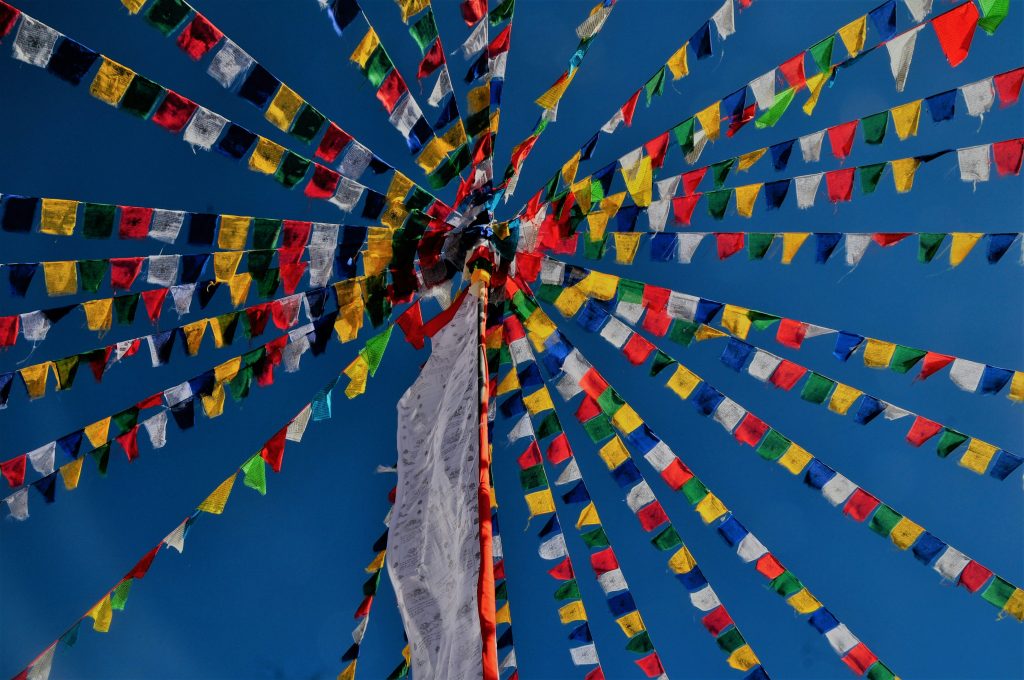
The Jacques Marchais Museum of Tibetan Art is normally closed for the winter, but it’s opening its doors for a special Losar celebration on Sunday, February 22 from 11 AM to 1 PM. The event features a traditional Tibetan New Year blessing led by Geshe La Ngawang Thugje, a senior Tibetan Buddhist monk, plus an opportunity to personalize a Tibetan prayer flag with your intentions for the year. Traditional New Year tea and cookies are included. It’s free, but seating is limited and advance RSVP is required (check the link — the deadline may have passed, but it’s worth reaching out).
The museum itself is worth knowing about even beyond Losar. Built in the 1940s to resemble a Himalayan mountain monastery — stone chanting hall, terraced gardens, lotus pond — it houses one of the largest collections of Tibetan art in the Western Hemisphere. Take the Staten Island Ferry (free!) from Manhattan, then the S74 bus to Lighthouse Hill.
| Buses to New York | From $5 | |
| Trains to New York | From $6 |
🥟 Best Eats
Because the best way to celebrate any holiday is with your mouth.
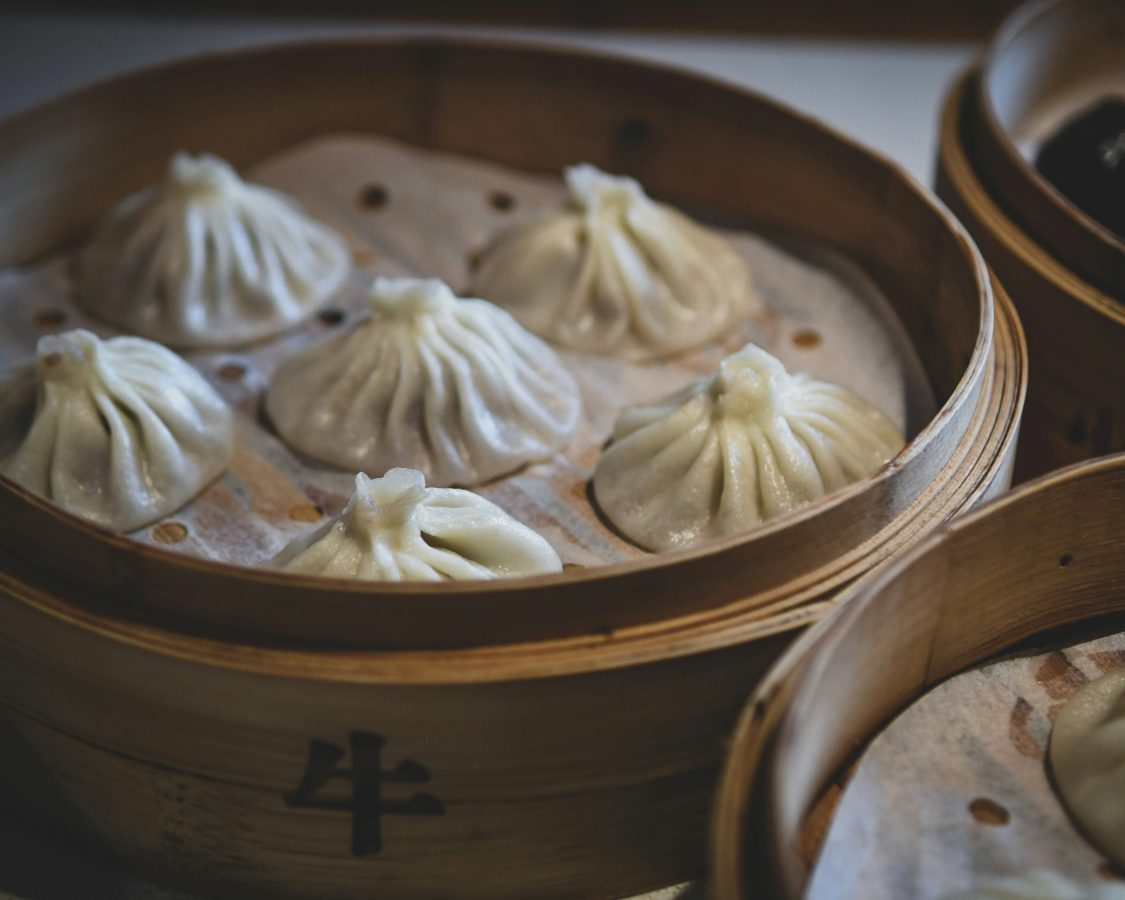
Here’s the thing about Lunar New Year food: every dish means something. Dumplings are shaped like ancient Chinese gold ingots — eating them is supposed to bring wealth. Nian gao (sticky rice cake) is a homophone for “higher year,” meaning things are looking up. Longevity noodles are served uncut because… well, you can figure that one out. Tangyuan (glutinous rice balls filled with red bean or black sesame) are round because they symbolize family unity. Even sesame balls — those crispy, chewy golden orbs you see in every bakery — expand as they fry, which means your fortune is expanding too.
The point is: eating well during Lunar New Year isn’t just fun, it’s auspicious. So here’s where to eat your way into a prosperous Year of the Horse.
Flushing, Queens (NYC)
Arguably the single best neighborhood in America for Lunar New Year eating. The blocks around Main Street and Roosevelt Avenue are dense with dim sum palaces, bakeries, noodle stalls, and food courts.
Asian Jewels Seafood Restaurant is one of the most popular dim sum spots in Flushing — carts rolling through a massive banquet hall, the whole experience. Shanghai You Garden is a soup dumpling institution with handmade xiao long bao and all-day dim sum. Nan Xiang Xiao Long Bao on Prince Street has nine types of soup dumplings if you want to get serious about it.
For sweets, hit Mochiido at Foodie Town Flushing Food Court for mochi donuts. Taipan Bakery on Main Street does fresh sesame balls that people line up for during Lunar New Year: warm, crispy, and meant to be eaten immediately.
And for a quick, cheap breakfast before the February 21 parade? Eight Jane on Main Street does jian bing — Chinese crepes made in front of you on a sizzling hot plate, folded around egg, and ready to eat on the run.
| Buses to New York | From $5 | |
| Trains to New York | From $6 |
Jackson Heights, Queens — Tibetan & Himalayan
If the rest of this list is about Chinese and Vietnamese Lunar New Year food (and it mostly is), Jackson Heights is where Tibetan traditions get their own spotlight. Roosevelt Avenue between 73rd and 76th streets has the densest concentration of Tibetan restaurants in the country, and during Losar, the menus expand with holiday-specific dishes you won’t find the rest of the year.
Phayul is the neighborhood’s Michelin Bib Gourmand pick — a tiny second-floor spot on 74th Street where the beef momos are handmade in front of you and the hot sauce on the table will make your lips quiver. Get the fried momos and a bowl of thukpa (Tibetan noodle soup) and you’re set. Khampa Kitchen on Roosevelt Ave specializes in food from Tibet’s remote Kham region — their poethek (a meat-stuffed pastry) was called one of the best bites in the city by the New York Times, and the chef uses herbs that his family in Tibet forages and sends to the U.S. Himalayan Yak is one of the oldest Himalayan restaurants in the neighborhood, with live local music on weekend nights and a yak momo that lives up to the name.
For Losar specifically, look for khapse (deep-fried twisted biscuits made in ornate shapes — every family has their own design), dresi (sweet buttered rice with raisins), and guthuk (a dumpling soup traditionally eaten on New Year’s Eve where hidden fillings — chili, wool, coal — are supposed to reveal your personality). And yes, that means someone at the table will bite into a dumpling stuffed with a pebble. It’s part of the fun.
| Buses to New York | From $5 | |
| Trains to New York | From $6 |
The DC / Rockville / NoVA Corridor
DC’s Chinatown might be small, but the DMV’s Asian food scene is one of the best-kept secrets on the East Coast — especially if you venture into the Maryland suburbs.
The Rockville area in particular has quietly become one of the most concentrated Asian food corridors in the region. Montgomery County’s Asian population has grown significantly over the past two decades, and the food has followed. Asian Bakery Cafe on Hungerford Drive is an authentic Hong Kong-style bakery cranking out fresh buns and pastries daily — red bean buns, egg tarts, pork buns, and the kind of no-frills selection that means they’re focused on getting the basics right. Bread Corner is another neighborhood favorite for Chinese pastries and cakes. China Garden Han Gong has been serving Cantonese cuisine in the DMV since 1973 and does a dim sum service with steamed shrimp dumplings, baked roast pork buns, and steamed beef rice crepe.
You don’t need a specific event to celebrate Lunar New Year here. Walk into any of Rockville’s Asian bakeries during the holiday and you’ll find seasonal treats — nian gao, sesame balls, pineapple cakes, red bean pastries — alongside the usual lineup. It’s the kind of quiet, personal way to celebrate that doesn’t require a parade: grab a box of red bean buns, some egg tarts, maybe a nian gao to slice and pan-fry at home, and you’ve got your own Lunar New Year tradition. (For what it’s worth, this is how a lot of people actually celebrate: a bakery run and a good meal with people you like.)
In DC proper, Joy Luck House in Chinatown does dim sum and seasonal specials. And if you’re in Arlington, Bar Chinois in National Landing is running a $65 prix fixe Lunar New Year dinner on Feb 17 with red chili wontons, Szechuan beef udon, black pepper duck, and matcha crème brûlée.
| Buses to Washington | From $7 | |
| Trains to Washington | From $6 | |
| Buses to Arlington | From $14 |
Postcards from the Wanderu Team: I first got to experience some semblance of the Chinese New Year in my high school Chinese classes. Though I don’t remember much of the language (save for how to count to ten, introduce myself, and say thank you), I certainly remember all the delicious foods we tried (Xièxiè nǐ, Liú lǎo shī!)
If you’re looking for a proper meal, there are also a number of great Dim Sum restaurants. I recommend Mai Dragon and China Garden Han Gong, both of which I’ve actually been to with friends. Both fantastic and filling and delicious.
— Andrew B.
Chicago’s Chinatown
Chicago’s Chinatown food scene is anchored by two things: dim sum and bakeries. And during Lunar New Year, both hit a different gear.
Chiu Quon Bakery — the oldest bakery in Chinatown, open since 1986 — handmakes everything from scratch, and their red bean buns are famous for having a generous filling-to-dough ratio at a price that won’t make you flinch. They’ve got two locations: the original on Wentworth and a second outpost on Argyle. Phoenix Restaurant is one of Chinatown’s classic dim sum palaces, with about 70 small plates on the menu and a festive Lunar New Year dinner on Feb 23.
But the real move is Hing Kee Restaurant’s 21st annual dumpling-making dinner on February 21-22. Guests learn about Lunar New Year traditions, fold their own dumplings, and eat a banquet of Chinese dishes — Mongolian beef, vegetarian options, the works. It sells out every year, so book tickets ahead of time.
For something more experimental, Noodle Club Chi has teamed up with Guinness Open Gate Brewery for a limited-edition Lunar Flame Red Ale with Szechuan peppercorn and passionfruit (yes, really), paired with chef Phillip Tang’s mapo tofu noodles. Available Feb 6-17.
| Buses to Chicago | From $8 | |
| Trains to Chicago | From $6 |
San Francisco’s Chinatown Bakeries
SF’s Chinatown bakeries are legendary year-round, but during Lunar New Year they shift into overdrive with seasonal specials you can’t get the rest of the year.
iCafe Bakery on Waverly Place has a massive menu of Lunar New Year specials: nian gao in brown sugar-ginger, coconut, and jujube flavors, plus sesame balls, pineapple cakes, turnip cakes, and steamed brown sugar cakes. Pre-order by calling ahead — they’re one of the few bakeries that plan around the holiday rush. Good Mong Kok Bakery on Stockton Street sells out regularly. Their lo po bang (wife cakes) are supposedly better than any other in San Francisco. Get there early.
For the modern twist, B. Patisserie’s annual Lunar New Year pastry drop is an event in its own right — Chinese-inspired kouign-amann, nian gao riffs (“Nian Goh” Butter Mochi 🤤), black sesame almond tea cakes. Preorders open on Tock and sell out fast.
| Buses to San Francisco | From $8 | |
| Trains to San Francisco | From $32 |
Philadelphia’s Lunar New Year Dining
Philly’s food angle for Lunar New Year is more about special events than bakery runs, but the events are worth it.
Ember & Ash is hosting a “Fire & Fortune” collaboration dinner with Gabriella’s Vietnam on February 17 — a multi-course, family-style live-fire feast starting with street-food bites, moving through traditional Good Fortune soup, meat, seafood, vegetables, noodles, and rice, and ending with a traditional Lunar New Year dessert. Specially themed cocktails round it out. $75/person, reserve on Resy.
Franklin Square’s free dumpling workshop with Sang Kee’s chef Michael Chow on Feb 21 is a hands-on way to learn the folds (and eat your work). And Heung Fa Chun Sweet House in Chinatown has been called “the place to go for homesick Chinese families,” which is about the highest compliment a bakery can get.
| Buses to Philadelphia | From $5 | |
| Trains to Philadelphia | From $6 |
🐴 Gallop Into It
The Fire Horse doesn’t wait around. It’s the most restless sign in the zodiac: independent, bold, and fundamentally opposed to sitting still. If any Lunar New Year was designed to get you to embrace a new experience (instead of sitting around in your apartment), it’s this one.
Search your route on Wanderu, grab a cheap ticket, and go find your version of the new year — whether that’s standing in a crowd of 100,000 watching a golden dragon roll by, or sitting in a bakery with a box of red bean buns and nowhere to be.
Xīnnián kuàilè! Losar Tashi Delek! Gung hay fat choy! Chúc mừng năm mới! 🧧